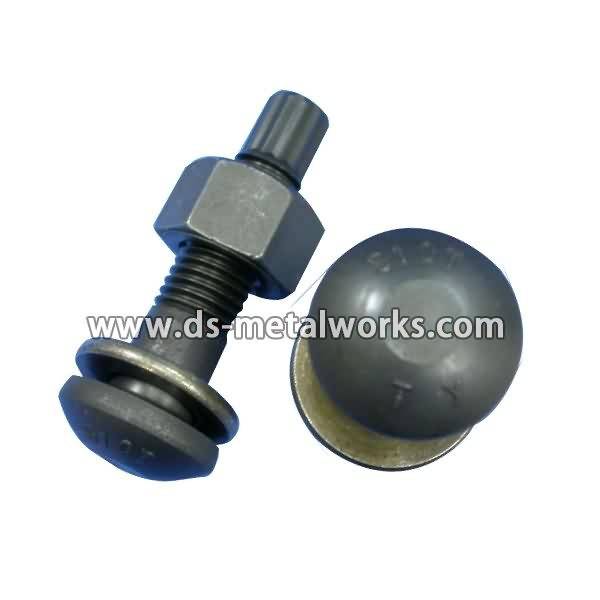
High Efficiency Factory DIN933 Din609 ISO4017 JIS1180 Metric Hex Head Bolts to Uruguay Factories
Short Description:
Metric Size Hex Head Bolts Hex Cap Screws Hex Fit Bolts Standard: DIN931, DIN933, DIN960, DIN961, DIN558, DIN601, DIN609, DIN610 ISO4014, ISO4017, ISO8765, ISO8676,BS4190, BS3692, UNI5739, UNI5740, JIS1180 Thread Size: M5-M80 with various lengths Class: ISO 898-1 class 4.6, 4.8, 5.6, 5.8, 6.8, 8.8, 10.9, 12.9 Finish: Black Oxide, Zinc Plated, Hot Dip Galvanized, Dacromet, and so on Packing: Bulk about 25 kgs each carton, 36 cartons each pallet Advantage: High Quality and Strict Quality Contro...
Product Detail
Product Tags
High Efficiency Factory DIN933 Din609 ISO4017 JIS1180 Metric Hex Head Bolts to Uruguay Factories Detail:
Metric Size Hex Head Bolts Hex Cap Screws Hex Fit Bolts
Standard: DIN931, DIN933, DIN960, DIN961, DIN558, DIN601, DIN609, DIN610
ISO4014, ISO4017, ISO8765, ISO8676,BS4190, BS3692, UNI5739, UNI5740, JIS1180
Thread Size: M5-M80 with various lengths
Class: ISO 898-1 class 4.6, 4.8, 5.6, 5.8, 6.8, 8.8, 10.9, 12.9
Finish: Black Oxide, Zinc Plated, Hot Dip Galvanized, Dacromet, and so on
Packing: Bulk about 25 kgs each carton, 36 cartons each pallet
Advantage: High Quality and Strict Quality Control, Competitive price,Timely delivery; Technical support, Supply Test Reports
Please feel free to contact us for more details.
Product detail pictures:


Our firm has been concentrating on brand strategy. Customers' satisfaction is our best advertising. We also offer OEM provider for High Efficiency Factory DIN933 Din609 ISO4017 JIS1180 Metric Hex Head Bolts to Uruguay Factories, The product will supply to all over the world, such as: Russia, Hamburg, Atlanta, The company has perfect management system and after-sales service system. We devote ourselves to building a pioneer in the filter industry. Our factory is willing to cooperate with different customers domestic and overseas to gain better and better future.
Watch more Learn Woodworking videos: https://www.howcast.com/videos/500378-Joinery-Basics-Woodworking
Joinery is the art and science of how you join two pieces of wood together. In woodworking, that’s actually not as simple as it sounds. When you’re joining two pieces of wood, you have to consider a couple factors. One is, wood is like a sponge and when it gets more humid out, it expands. During the winter, when it’s less humid, it contracts, and that can cause shifts in how wood is connected in pieces of furniture.
The other most important thing that really effects joinery is the nature of wood it’s self. If you look at a piece of wood like this, the way to understand it is think of it like a packet of straws with all the open ends here, and here. And these are like long fibers of wood, here. So, when you go to join a piece of wood on the end, like this, whether you’re using glue or screws and nails, this end grain is a very weak part of the wood. It doesn’t hold fasteners well, and it doesn’t hold glue well because it soaks down into those open ends. So, woodworking joinery has been designed to get around the problem of end-grain, for the most part. That’s where all these joints come from. Let’s look at the four different applications of wood joinery, to begin with. This will give an overview.
The first, and most obvious kind, is joining pieces of wood edge to edge, like this. This is where you’re making panels of wood, like on a tabletop, for example. Another way to join wood is to join the end to the face. So, here’s the face and you’re joining an end. This kind of joinery, you’ll see everything from nails and screws, all the way up to really fancy, dove-tail joinery. Another type of joinery is when you’re joining edge to face, like this. So, you’ve got one edge, and a face, but no end-grain involved here. So, lots of glue area, which creates different types of joints along here, and there’s a variety of joints, also, to fasten wood together, this way.
The last way that you can join wood is variation on the end-to-face, it’s called end-in-the-middle-of-wood come to face, here. I guess you’d call this a shelf, or housing type joint. Usually, you’ll see a data or groove for things like this, or a sliding dovetail. Let’s look at the edge-to-face joint. One really common way to do that, is with miters. A miter joint is where both pieces of wood are cut at 45 degrees, and they join in a 90 degree corner. A pretty nice joint, and it can also be reinforced with splines, in this way. Here’s a plain miter joint, both of these picture frames. That’s a pretty common application, and for boxes and cabinets as well.
Another common edge-to-face joint, is a box joint. A box joint is just a series of tabs and slots that connect together. This is also called a finger joint. So, the fourth type of joint is where you’re joining an edge to an end, in this way. This is a very common joint, that’s often made with a mortise and tenon, as an example. For instance, this could be a rail of a table, and this could be an apron. So, those are the four different types. Mortise and tenon is an example of that end-to-edge joint, where you’ve got a mortise in the edge of one, and you’ve got a tenon in the end of the other piece.
In all of these instances, what we’re trying to do, and the whole basis of joinery, is trying to create as much long-grain surface, and as little end-grain surface as possible. In the mortise and tenon, here, we’ve got these wide faces which are all long-grain, and they’re meeting up with long-grain inside. So, a nice, strong glue joint for that one. You can also use methods, such as biscuits, to span these. Biscuits strengthen the end-grain of one board into the face of the other, and they join up, like that.
So, all of these methods are used to join the wood, through the strong joint, without the use of fasteners, and that’s in traditional woodworking. You’re generally trying to make joints that have mechanical strength, and a lot of glue surface area that can hold the wood, without having to use fasteners.
We are professional manufacture and exporter of all sizes of screw tie rod for construction.The normal type is 10/12mm,15/17mm,20/22mm with material of Q235 or 45# steel,also the hot rolled tie rod ranges from 18mm to 40mm for high strength requirements for European market which can reach to more than 1000KN.We have more than 10 tie rod making machines to meet your quick delivery demand.And also we have techniciens to design the screw size for you to mach the nut you need exactly.Please view more products by:www.formworkscaffolding.cn AND send me email by: riozhang@baisongroup.com