Manufacturer for ASTM F1554 Anchor Bolts Foundation Bolts to Japan Factories
Short Description:
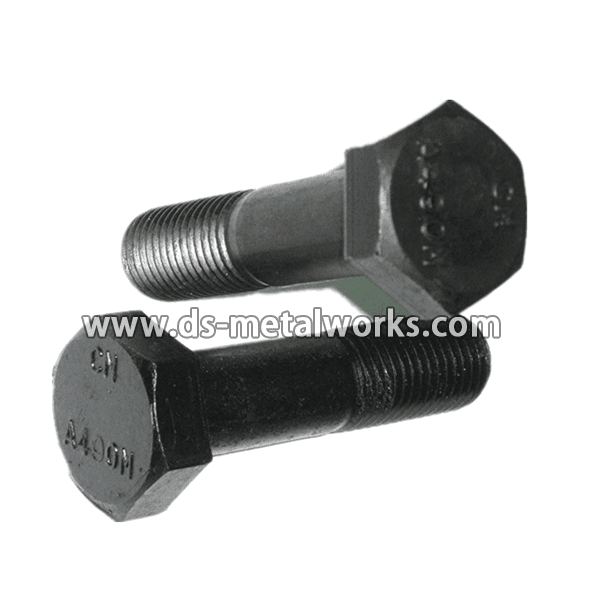
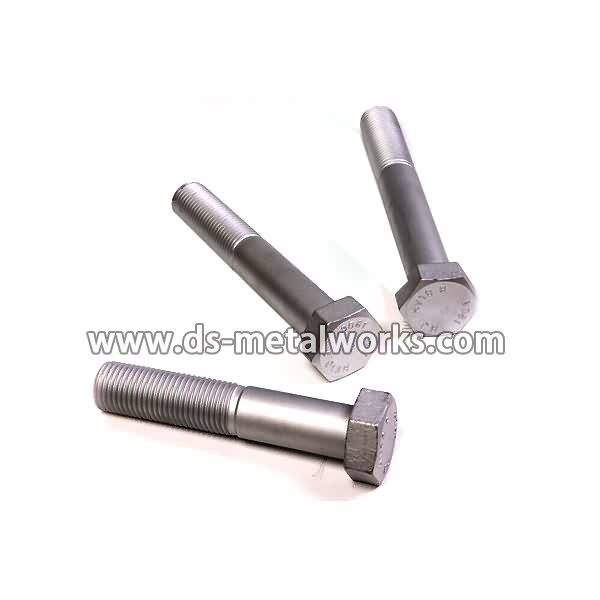
The ASTM F1554 specification covers anchor bolts designed to anchor structural supports to concrete foundations. F1554 anchor bolts can take the form of either headed bolts, straight rods, or bent anchor bolts. Thread Size: 1/4″-4″ with various lengths Grade: ASTM F1554 Grade 36, 55, 105 Various material grade and metric size are also available Finish: Plain, Black Oxide, Zinc Plated, Hot Dipped Galvanized, and so on. Packing: Bulk about 25 kgs each carton, 36 cartons each pallet....
Product Detail
Product Tags
Manufacturer for ASTM F1554 Anchor Bolts Foundation Bolts to Japan Factories Detail:
The ASTM F1554 specification covers anchor bolts designed to anchor structural supports to concrete foundations.
F1554 anchor bolts can take the form of either headed bolts, straight rods, or bent anchor bolts.
Thread Size: 1/4″-4″ with various lengths
Grade: ASTM F1554 Grade 36, 55, 105
Various material grade and metric size are also available
Finish: Plain, Black Oxide, Zinc Plated, Hot Dipped Galvanized, and so on.
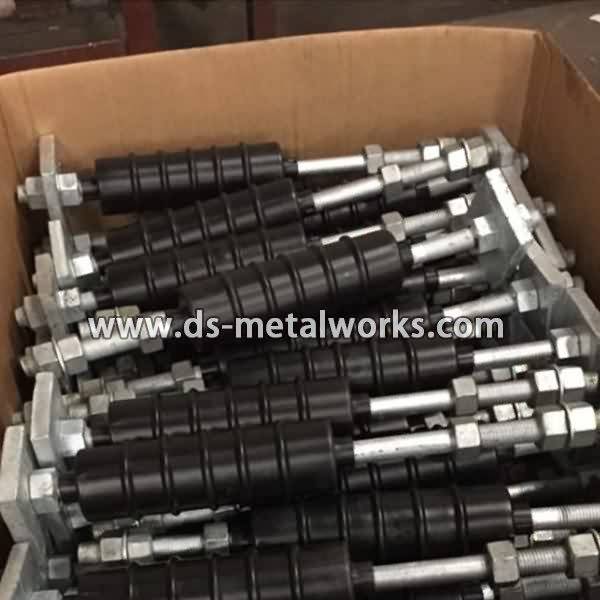
Packing: Bulk about 25 kgs each carton, 36 cartons each pallet. Or, comply with your requirement.
Advantage: High Quality and Strict Quality Control, Competitive price,Timely delivery; Technical support, Supply Test Reports
Please feel free to contact us for more details.
Product detail pictures:


Our corporation insists all along the quality policy of product top quality is base of organization survival; purchaser pleasure will be the staring point and ending of an company; persistent improvement is eternal pursuit of staff plus the consistent purpose of reputation very first, purchaser first for Manufacturer for ASTM F1554 Anchor Bolts Foundation Bolts to Japan Factories, The product will supply to all over the world, such as: Nepal, Guatemala, Armenia, With the superior and exceptional service, we are well developed along with our customers. Expertise and know-how ensure that we are always enjoying the trust from our customers in our business activities. Quality, honesty and service is our principle. Our loyalty and commitments remain respectfully at your service. Contact Us Today For further information, contact us now.
Making A Rectangular Bluing Tray, by Clickspring
It can be a bit hit and miss getting a consistent, uniform blue on long slender parts like clock hands. So I made a third component for the bluing tray set, to do the job right. Using a scrap piece of brass left over from the frames of the current clock build, I used a shop made D bit to mill some grooves so that it could be folded into the shape of a box.
The other videos that this video is related to are:
“Spare Parts #8 – Making A D Bit Single Flute Milling Cutter “: https://youtu.be/jlNxvnOxMCE
“Home Machine Shop Tool Making – Making A Versatile Bluing Tray”: https://youtu.be/8h1Uf9bkc3E
If you would like to help support the creation of these videos, then head on over to the Clickspring Patreon page: https://www.patreon.com/clickspring
Ask Me A Question:
https://www.clickspringprojects.com/contact.html
Follow Clickspring:
https://www.patreon.com/clickspring
https://www.facebook.com/Clickspring1
https://plus.google.com/u/0/113668471124073837794/posts
https://instagram.com/clickspring1/
https://www.tumblr.com/blog/clickspring1
https://www.pinterest.com/clickspring1
Abbreviated Transcript:
00:03 This bluing tray set that I made in a previous video has been working well for bluing screws and other small parts.
00:13 In particular the tray with brass shavings is very effective at distributing the heat slowly and evenly across the part, ensuring a uniform blue finish.
00:20 But some of the blued parts coming up in the clock build in the near future, are quite long and thin, so a longer tray will be required when I blue them.
00:29 However the box shape would present a bit of a challenge at the soldering stage if it
00:42 was made of separate parts, so I’m making it as one piece that can then be folded into shape. Now there a quite a few ways to tackle this job, but I thought I’d show you a mill equivalent of the super glue arbor you’ve seen me use so often on the lathe
00:54 I’m using this block of aluminium to hold the workpiece, and the first thing I’m going to do is give it a light resurface with this flycutter. The flycutter is shop made, and has quite a lot of mass in the disc, and generally gives me a smooth cut.
01:30 Acetone cleans off the surface, and a light coating of glue is enough to hold the part. Once the work is in position, pressure from the spindle holds it in place as the glue cures.
01:44 I can now machine all of the exposed surfaces in the one operation, starting with the perimeter. I’ve made this D Bit cutter specifically to cut the v grooves. Click the link if you’d like to see a video showing how this was made.
02:18 The cutter has an included angle of 92 degrees, which is going to help when it comes to bending everything to shape later. I also shifted the cutter across to take a final skim cut on the sides of each groove, to create a little more space for the solder to fill.
02:39 And as always with superglue, a gentle heat breaks the bond. The little corner pieces need to be removed before I can fold the box to shape, so I used a jewellers saw takes care of those, and then I tidied up the saw cut on the belt sander.
03:13 A little heat from the propane torch to anneals the brass, and then once it had cooled down
03:18 I set about forming it into the shape of a box, with some flux, silver solder and tying wire. Now that the brass is annealed, it bends easily without cracking, leaving a small gap for the solder.
04:30 The brass holds the box shape well when its cool, but it’ll flex and sag quite a lot when under heat, so I used some soft tying wire to bind it all together for the soldering operation. A little more flux, and then a good measure of silver solder was placed into position, enough to form a decent fillet when it flows.
05:22 The work always looks a bit rough after silver soldering, but the main objective has been achieved, a good solid join, with a nice fillet. The bracing wire can now come off, and the surfaces given a general clean up with coarse grit emery paper.
05:41 The corners came out quite close and square, but I decided it would be better to round
them off, to match the curve of the bent edges. Then I took the part back to the mill, to form the thread for the handle.
06:14 Now the tray should lean comfortably on the handle when its sitting on the bench, so the feet need to be positioned slightly forward of the center of gravity to achieve this. Using a scrap rod, I decided on a pivot distance that gave a good result, and then formed the holes and threads for the feet.
07:46 With the addition of this rectangular tray, the bluing tray set can now accommodate most of the common shapes and sizes I’ll need to blue over the next few clock projects. And of course what better way to test it, than with a Clickspring.
References:
“The Model Engineers Workshop Manual” pg 94
George H Thomas
The many forum posts on the subject of D Bits
by John “Bogstandard” Moore
Making A Rectangular Bluing Tray, by Clickspring.
3 ways to improve your long jump by Keinan Briggs
Song: – Destroy the sun
by: Dustfingaz Beats
Drills
Runway Speed
https://www.youtube.com/edit?o=U&video_id=V3TEM7g52ng
Ramp to Bungee
https://www.youtube.com/edit?o=U&video_id=hhJaWgP2EPQ
The Ramp
https://www.youtube.com/edit?o=U&video_id=2_BXPztoIwg
Flat Flat Drill
https://www.youtube.com/edit?o=U&video_id=6n4KCzd4GEY